Politics
Judge blocks Big Bend border wall across 500-mile Texas sector
A federal judge on Friday temporarily blocked border wall construction across the roughly 500-mile Big Bend sector of Texas, halting work on a project that has drawn five contracts worth more than $6bn.
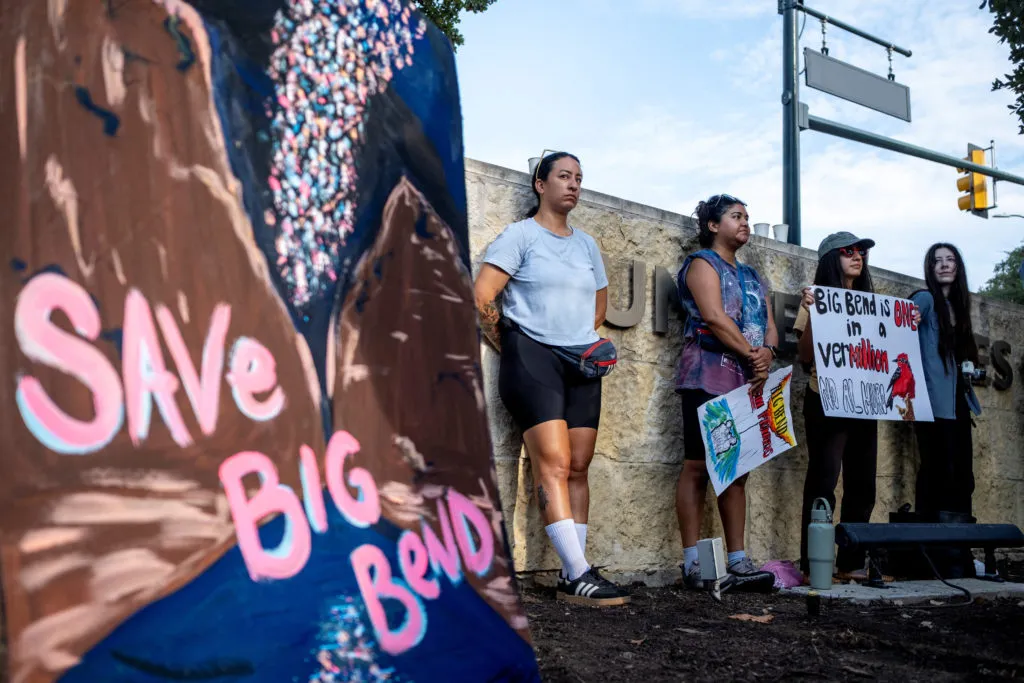 Photo: PBS NewsHour
Key points
A federal judge on Friday temporarily blocked border wall construction across the roughly 500-mile Big Bend sector of Texas.
A federal court in Texas on Friday issued a ruling temporarily blocking the Trump administration from building a border wall and other infrastructure across the state's Big Bend region. The ruling by US district judge Kathleen Cardone covers a roughly 500-mile sector that accounts for about a quarter of the roughly 2,000-mile southern border with Mexico.
The decision matters because the Big Bend sector contains the longest unwalled stretch along the US-Mexico border, and the administration had begun erecting the first wall panels there in mid-September. Landowners, businesses and environmentalists in the region have united against the project, which is part of a $46 billion effort to line the southern border with steel walls, vehicle barriers, roads and surveillance technology.
What the ruling covers
Cardone's ruling includes Big Bend National Park, which sits on a bend of the Rio Grande River, and extends across the entire Big Bend sector. The judge wrote that the plaintiffs were "likely to succeed on the merits of at least one of the claims in suit, that there is a likelihood that they will suffer serious, irreparable harm without an injunction, and that the balance of the equities and the public interest weigh in their favor."
The ruling came after a hearing in El Paso in a lawsuit filed by the Friends of the Ruidosa church, the Center for Biological Diversity and river guide Billy Miller. The plaintiffs argued that the Department of Homeland Security was wrong to bypass regulations meant to protect the environment, culture and archeology of regions like the Big Bend area.
The mechanism at issue is a set of Department of Homeland Security waivers that suspended dozens of environmental and historical protection laws to speed construction. Cardone blocked those waivers, and the ruling bars Customs and Border Protection from border security infrastructure construction or ground disturbance unless it complies with the federal laws the department tried to suspend.
How the waivers were challenged
Opponents argue the region is so remote and rugged that it serves as its own deterrent to illegal immigration, and that unauthorized crossings are already rare because of the lack of nearby cities on the Mexican side and prominent cliffs. When bulldozers were spotted clearing land in the park in August, Republicans and Democrats called for the administration to stop.
Customs and Border Protection paused all activity in the park, but that pause expired on September 30, and the administration has said it is reevaluating plans for the National Park without saying what it will do there. The agency has awarded five contracts for Big Bend totalling more than $6bn for what it calls the "smart wall" — 30-foot steel bollard fencing, vehicle barriers and surveillance technology.
Where the contracts stand
The Republican-dominated Congress included $46.5bn for border wall construction in last year's spending bill, which led Customs and Border Protection to focus much of its effort on Big Bend. In areas up and downriver from the park, the government has sought permission from landowners to survey and build, and a recent court filing said it was prepared to refer some cases to the Justice Department.
Laiken Jordahl, with the Center for Biological Diversity, called Cardone's ruling a "total victory" and said, "The bulldozers are going to be sent packing until she rules on the merits." Tiernan Sittenfeld, president and chief executive of the National Parks Conservation Association, said the administration should repair the damage already done to Big Bend National Park and meet with local residents.
A Customs and Border Protection spokesperson said the agency stands by its assessment, remains confident in its legal authorities to secure the border while preserving the Big Bend landscape, and is working with the Department of Justice on next steps. Customs and Border Protection and the Department of Homeland Security did not immediately respond to a request for comment on the ruling.
The ruling is temporary and does not resolve the case on its merits; Cardone's findings on the merits are still to come. The dispute over the waivers and the future of construction across the roughly 500-mile Big Bend sector continues in the federal court in Texas, where the next step is the judge's ruling on the merits.
Frequently asked questions
What did the judge block?
US district judge Kathleen Cardone issued a temporary ruling blocking the Trump administration from building a border wall and other infrastructure across Texas' Big Bend region, covering Big Bend National Park and the roughly 500-mile sector.
How much has been spent on Big Bend wall contracts?
Customs and Border Protection has awarded five contracts for Big Bend totalling more than $6bn for a mix of 30-foot steel bollard fencing, vehicle barriers and surveillance technology.
Why did opponents challenge the project?
Plaintiffs argued the Department of Homeland Security wrongfully used waivers to bypass environmental, cultural and archeology protections, and that the region's remoteness and rugged landscape already deter illegal crossings.
How this story was checked
- Fact-checked against 3 cited pages. 20 figures, dates and quotations in this story were found on the pages it cites.
- Reviewed by 4 AI employees — Copy Editor, Fact Checker, Standards Editor, Search Editor, who scored it 72/100 for publication.
Pages checked (3 of 3)
- pbs.orgread and checked
- theguardian.comread and checked
- nbcnews.comread and checked
Written by Kaer from public reporting. Checked 3 October 2026.