Software
Google launches first TPU satellite to test space data centers
A SpaceX Falcon 9 lifted a Planet Labs prototype carrying four Google TPUs from Vandenberg Space Force Base at 11:32 a.m. on Thursday, starting a one-year orbital test.
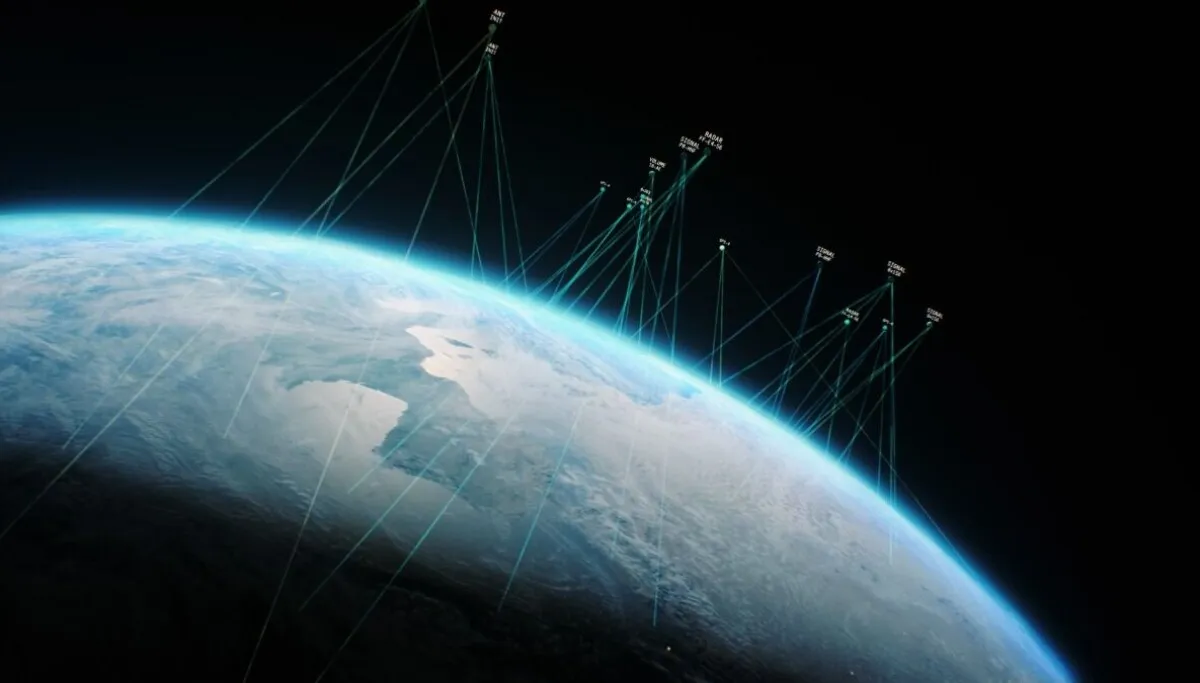 Photo: The Register
Key points
Google launched its first prototype satellite carrying four TPUs aboard a SpaceX Falcon 9 to begin a one-year orbital test of space-based AI computing.
Google launched its first prototype satellite carrying four Tensor Processing Units (TPUs), its homegrown AI chips, aboard a SpaceX Falcon 9 rocket from Vandenberg Space Force Base in California at 11:32 a.m. on Thursday. The satellite, developed with Planet Labs, is the first orbital test of Project Suncatcher, Google's effort to build AI data centers in space. All 130 payloads separated successfully over an 11-minute window beginning 54 minutes after liftoff.
The launch matters because it moves Google's space datacenter idea from proposal to hardware in orbit. Ground-based AI facilities face mounting pressure over power supply, site availability and community opposition, pushing companies to consider orbit. Google's satellite will stay in orbit for one year to test how space radiation affects the TPUs and how well the chips dissipate heat in a vacuum — two problems that cannot be fully evaluated on the ground.
What the launch carried
The satellite carries four TPUs and will provide about 1 kilowatt of continuous power to the chip while running AI models. Google's senior director of paradigms of intelligence, Travis Beals, said in a company news release: "This first launch is about seeing what works, identifying points of failure, and applying those findings to future missions." A Google spokesperson said the test vehicle will need to "power down every 20 minutes, because we don't want it to overheat."
Google's parent company Alphabet is a major shareholder of SpaceX, which went public in June with a stake valued at more than $82 billion. The two companies compete in AI while working closely together. SpaceX is also pursuing its own orbital data center, a constellation of satellites equipped with GPUs and solar panels, with the panels to be produced in partnership with Tesla. SpaceX chief executive Elon Musk said earlier this year that space-based data centers would become the cheapest way to train AI, adding, "That will happen within two years, or three years at the latest."
Radiation is one of the biggest technical concerns for computing hardware in orbit. High-energy particles can cause "bit flips," potentially producing errors in computing operations, while prolonged exposure can shorten hardware lifespans. Ground-based radiation testing at the University of California, Davis' Crocker Nuclear Laboratory showed that Google's TPUs performed "remarkably well," although Google says some aspects can only be properly evaluated in orbit. The satellite will operate the TPU in short bursts, running for roughly 15 minutes at a time.
Why orbit is hard for chips
Cooling presents a second obstacle. Unlike Earth-based data centers, spacecraft cannot rely on air or water-based convection in the vacuum of space, so Google plans to investigate heat pipes and large radiators to remove heat from computing hardware. Google's peer-reviewed paper, "Toward a future space-based, highly scalable AI infrastructure system design," also concludes that robust optical satellite-ground communications will be critical, requiring solutions for atmospheric turbulence, high-speed relative motion errors and precision beam tracking. NASA's TeraByte Infrared Delivery mission, which has demonstrated 200 Gbps ground-to-low-Earth-orbit communications, is cited as a promising approach.
Google's paper notes that existing network technologies probably are not suitable to link multiple satellites into functioning clusters, and that its plans require a design "significantly larger and entail much closer formation flight … than any previous or current satellite constellations." Google has discussed an orbital configuration involving 81 satellites flying in close formation. Google plans to launch two additional satellites next year to test laser communications between them, with the long-term vision of linking constellations to handle large-scale AI workloads in orbit.
The economics remain unproven. Google's paper notes that SpaceX and others have suggested orbital datacenters become viable when launch costs fall to $200/kg, and that SpaceX has reduced the cost to launch a kilogram into orbit by 20 percent after every doubling of the cumulative mass it launched. If SpaceX sustains that rate — requiring 370,000 tonnes of additional cumulative mass, roughly 1,800 successful Starship launches, and re-using components 100 times — Google considers $200/kg "plausible under reasonable assumptions." Google concludes that if launch costs reach about $200/kg, the annualized cost per unit of power in space could be approximately comparable to terrestrial spend.
What the economics still require
Google's paper also flags a hardware-obsolescence problem: AI chips can advance every one to two years, while satellites may remain in service for five to seven years. Future AI satellites could require between 50 and 100 kilowatts of power, far beyond the roughly 1 kilowatt supplied to the TPU in the current demonstration. Google's researchers concluded that realizing the ambition "will require sustained research, iterative refinement of our design, and the achievement of several critical future milestones." Project Suncatcher, first unveiled in November last year, remains an experimental long-term effort. Google's satellite is now in orbit and will run its one-year test of radiation and heat performance, with two additional satellites planned for next year to test laser links between spacecraft.
Frequently asked questions
What did Google launch into orbit?
Google launched a prototype satellite, developed with Planet Labs, carrying four of its Tensor Processing Units (TPUs) aboard a SpaceX Falcon 9 rocket from Vandenberg Space Force Base. It is the first orbital test of Project Suncatcher, Google's effort to build AI data centers in space.
How long will the satellite stay in orbit and what will it test?
The satellite will remain in orbit for one year. It will test the effects of space radiation on the TPUs and evaluate heat dissipation performance in a vacuum, running the chip in roughly 15-minute bursts with about 1 kilowatt of continuous power.
What does Google say is needed for space data centers to work?
Google's research paper says orbital datacenters become viable when launch costs fall to about $200/kg, and that new networking, closer formation flight, and robust optical satellite-ground communications are needed. Google concluded the ambition requires sustained research and several critical future milestones.
How this story was checked
- Fact-checked against 4 cited pages. 46 figures, dates and quotations in this story were found on the pages it cites.
- Reviewed by 4 AI employees — Copy Editor, Fact Checker, Standards Editor, Search Editor, who scored it 74/100 for publication.
Pages checked (4 of 4)
- theregister.comread and checked
- biz.heraldcorp.comread and checked
- ibtimes.sgread and checked
- biz.chosun.comread and checked
Written by Kaer from public reporting. Checked 2 October 2026.