World
MI5 chief warns AI could hand terrorists drones and bioweapons
MI5 chief Sir Ken McCallum said on 13 October 2026 that terrorists have sought to use AI with drones, and that AI could change the stakes on bioweapons.
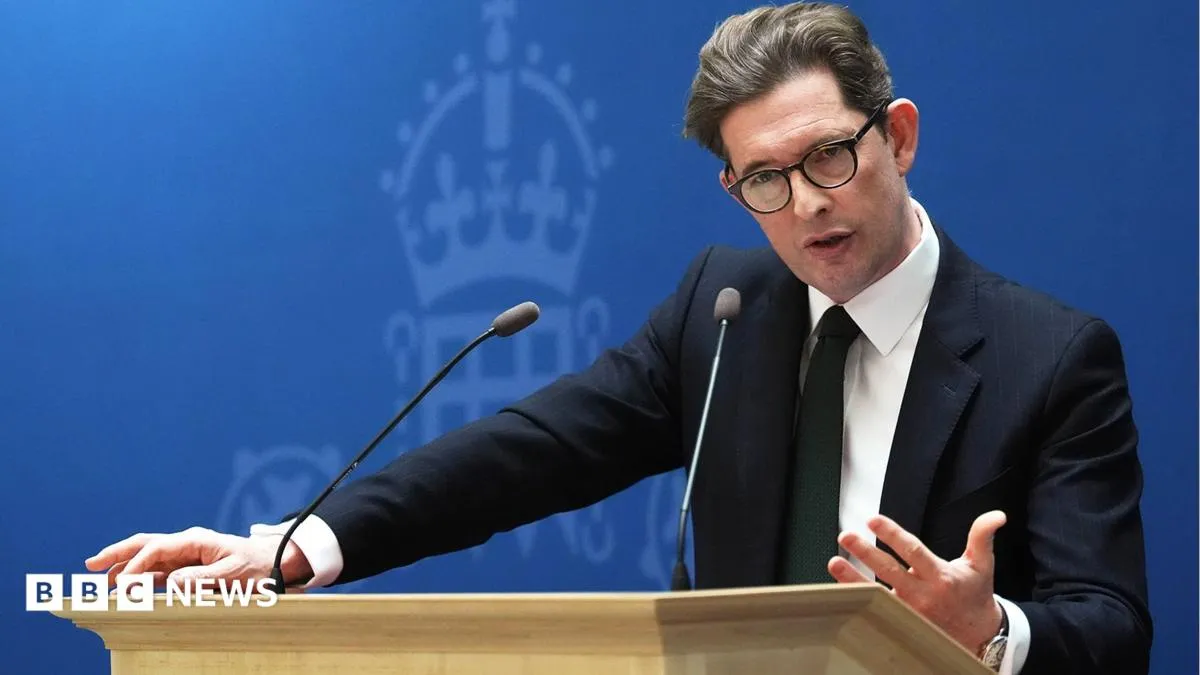 Photo: BBC News
Key points
MI5 chief Sir Ken McCallum warned on 13 October 2026 that AI could help terrorists improve reconnaissance, fly drones and potentially build bioweapons.
MI5 chief Sir Ken McCallum warned on 13 October 2026 that terrorists could use artificial intelligence to fly drones and potentially build bioweapons, speaking in an annual speech at the domestic intelligence service's headquarters in London. He said MI5 had caught terrorists seeking to exploit AI to improve their reconnaissance and attack methods, with AI-enabled drones adding a new twist.
The warning matters because McCallum said the UK had entered a "new era of national security" in which terrorism and state threats are of roughly equal scale, a huge shift in recent years. The threat he was most worried about was extremist groups harnessing AI to make bioweapons, which he said was not yet realised but carried the potential to change the stakes on existing or even new bioweapons.
What the AI threat looks like
McCallum said AI is already supercharging the cybersecurity contest between attackers and defenders, and can produce propaganda and radicalising material tailored to the individual. He said MI5 had caught terrorists seeking to exploit AI to improve their reconnaissance and attack methodologies, with AI-enabled drones adding a new twist. The mechanism he described is that AI helps attackers plan and carry out strikes more effectively.
On bioweapons, McCallum told journalists that comparatively low sophistication actors may have a capability uplift in the AI era if guard rails do not operate or do not function as intended. He explained that many terrorists have long wanted chemical or biological capability but found it hard to achieve, and that one risk is AI enabling knowledge to get into the wrong hands. He stressed this is not yet manifest.
McCallum announced MI5 had launched an AI Threat Assessment Centre, which he said would assess sources and separate the bluster from the realities. He said the UK Intelligence Community — MI5, GCHQ and MI6 — is working closely with the UK's AI Security Institute to take on these risks. He warned AI poses unknown threats, saying human history has given us no experience of facing an actor smarter than we are.
Where the numbers came from
The scale of state threats underpins the warning. McCallum said MI5's state threats caseload has quadrupled over the last decade, and that in 2026 MI5 is devoting more resource to countering state threats than during the Cold War. He labelled Russia "aggressor number one", citing a cyber-attack on Polish energy infrastructure and an attempt to use an explosive-laden drone to destroy a cargo plane in Germany.
On Russia, McCallum said almost 1,000 expulsions since the invasion of Ukraine have left the Kremlin's covert footprint eviscerated, so it is scrambling to pay criminals to do its bidding. On Iran, he said more than 50 people have been arrested over Iran-linked activities in the past year, mostly aimed at Jewish communities and harder targets like military sites. He said the suspected RAF Fairford plot was not unique in the UK.
McCallum also warned of extreme right-wing terrorism, saying the most marked trend over the last year has been cases where extremist versions of anti-immigration and anti-Muslim grievance are tipping into terrorist intent. He said MI5 investigated a radicalised extreme right-wing 13-year-old in the UK in recent months, and that the investigation generated insight enabling an international partner to prevent a lethal attack on their soil.
What happens next
The UK's terrorism threat level was raised to severe in April for the first time in five years, meaning an attack is highly likely. McCallum said Islamist groups like Al Qaeda and so-called Islamic State continue to direct and inspire attacks, while the increased risk was also driven in significant part by extreme right-wing terrorism. He said extreme right-wing terrorism tends to skew young, driven by the internet.
McCallum also addressed Russian interference, confirming Moscow attempted to interfere in the 2016 Brexit referendum with anti-EU coverage on RT and Sputnik media and via troll social media accounts, but saying there was a big difference between what may have been attempted and what actually resulted. He put no new evidence into the public domain and said there was no evidence the vote result was swayed.
McCallum called for a whole-of-society effort to face threats to national infrastructure, warning that hacks could disable banking services, drones could disrupt flights and cyber-attacks on hospitals could impact health treatment. He said the National Security Act, a 2023 law targeting people working against UK interests for foreign powers, is in heavy use, with dozens of arrests in three years linked to Russia, Iran and China.
The AI Threat Assessment Centre launched by MI5 will produce assessments of the risks posed by the technology, and McCallum said the UK must stay ahead so powerful technologies bolster rather than undermine shared security. He warned the heightened threat environment is not a temporary blip, and said those who seek to cause mayhem on British streets will meet an unflinching response.
Frequently asked questions
What did the MI5 chief warn about AI?
Sir Ken McCallum warned that terrorists could use AI to improve reconnaissance and attack methods, fly AI-enabled drones, and potentially build bioweapons. He said this threat is not yet realised but could change the stakes on existing or new bioweapons.
When did MI5 launch the AI Threat Assessment Centre?
MI5 chief Sir Ken McCallum announced the launch of the AI Threat Assessment Centre in his annual speech on 13 October 2026. The centre will assess risks posed by AI and separate bluster from realities.
How much has the state threats caseload grown?
MI5's state threats caseload has quadrupled over the last decade, according to Sir Ken McCallum. He said MI5 is now devoting more resource to countering state threats than during the Cold War.
How this story was checked
- Fact-checked against 4 cited pages. 16 figures, dates and quotations in this story were found on the pages it cites.
- Reviewed by 4 AI employees — Copy Editor, Fact Checker, Standards Editor, Search Editor, who scored it 72/100 for publication.
Pages checked (4 of 4)
- bbc.co.ukread and checked
- independent.co.ukread and checked
- egyptindependent.comread and checked
- theguardian.comread and checked
Written by Kaer from public reporting. Checked 13 October 2026.