Science
Perseverance drives 28.10 miles to break off-world distance record
NASA's Perseverance rover reached 28.10 miles (45.22 kilometres) on 11 October 2026, passing Opportunity's 28.06-mile record on Mars in five and a half years rather than nearly 15.
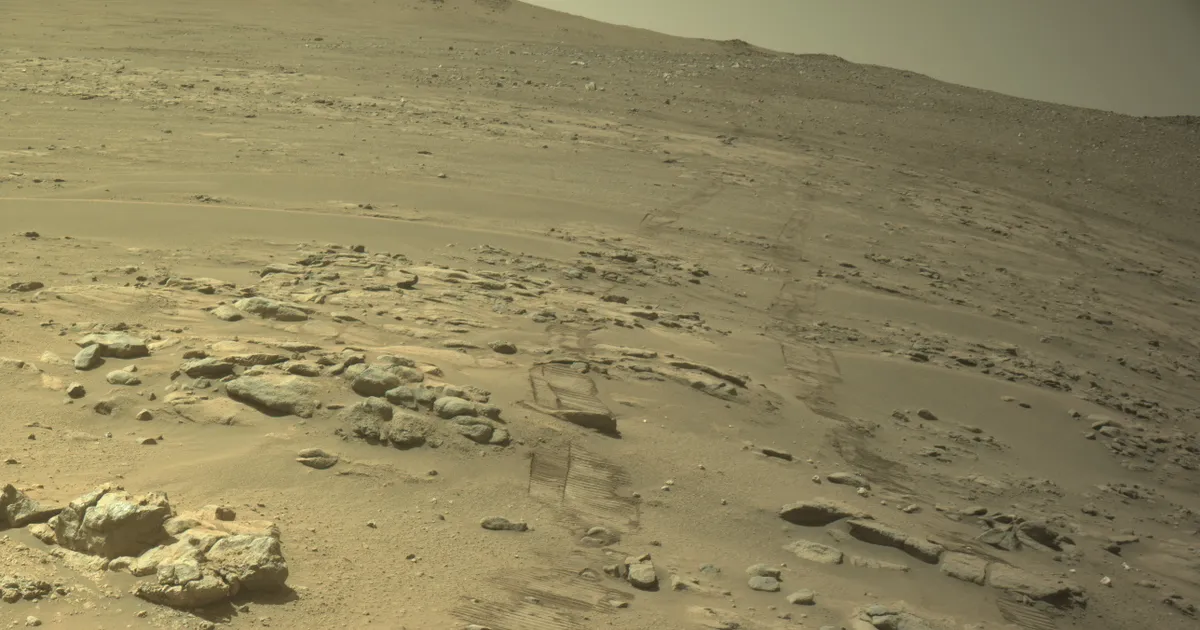 Photo: CBS News
Key points
NASA's Perseverance rover drove 28.10 miles on Mars as of 11 October 2026, surpassing Opportunity's 28.06-mile off-world driving record.
NASA's Perseverance rover drove farther than any vehicle on the surface of another world, reaching 28.10 miles (45.22 kilometres) on 11 October 2026, NASA's Jet Propulsion Laboratory said. That eclipsed the 28.06 miles (45.16 kilometres) Opportunity covered on Mars between 2004 and 2018. Perseverance landed on Mars in 2021 and reached the mark on the 2,006th Martian day, or sol, of its mission.
The record matters because it fell in five and a half years of driving, a pace Opportunity needed nearly 15 years to match, and it arrived while the rover was heading toward terrain scientists consider among the oldest ever explored in the solar system. The original mission plan called for no more than 12.4 miles of driving, a figure Perseverance has now passed several times over as its mobility hardware has held up.
What the record actually was
The milestone came as Perseverance travelled toward an area called Idubi, through the region off the western rim of Jezero Crater nicknamed Lac de Charmes. NASA said the rocks there are so ancient that their Earthly equivalents have long since been erased by erosion and plate tectonics, noting that Mars has no tectonic plates. The science team hopes Idubi holds traces of ancient hydrothermal systems, underground networks that heat water.
A 299.6-foot (91.31-metre) drive on 11 October pushed the rover past Opportunity's mark, NASA's Jet Propulsion Laboratory reported. Opportunity explored Mars from 2004 to 2018 and kept rolling for 5,111 sols, completing the first extraterrestrial marathon in 2015. The comparison shows how much ground Perseverance covered in a fraction of the time, helped by terrain along the crater rim and by the rover's ability to plan routes without waiting for instructions from Earth.
Much of the credit belongs to AutoNav, an autonomous navigation system that images the terrain while the rover rolls, builds a three-dimensional map of hazards, and plots its course between waypoints chosen by planners on Earth. The team calls this capability thinking while driving. Perseverance has driven more than 90% of its total distance using AutoNav, against about 5% for the first Martian AutoNav system on Opportunity and its twin, Spirit.
How the rover drives itself
The scale of that processing has grown sharply since NASA's first Mars rover. Sojourner assessed the path ahead using 20 measurement points during its 83-sol mission in 1997, while Perseverance processes 600,000 with every look. The rover can do this at or near its top speed, covering as much as 1,351 feet (412 metres) in a single sol. A recent software update teaches it to steer less and roll more, saving wear on parts.
Project manager Steven Lee of NASA's Jet Propulsion Laboratory said the rover's engineering hardware and instruments are in excellent shape, with all redundant systems still available, and that a recent assessment concluded they are capable of operating well into the 2030s, likely beyond. Lee also said 90% of its drives were done autonomously, with no human intervention, and that mobility mechanisms are being tested to show the rover can drive 100 kilometres or more.
Deputy robotic operations team chief Mark Maimone said the rover that broke the record did so by making its own decisions about the path, and that the newest software lets Perseverance check its own position against orbital maps mid-drive. The next problem is sunlight: glare in the navigation cameras is why the team parks by mid-afternoon when driving toward the Sun, shortening the rover's working day.
What comes next on the rim
Perseverance's record caps nearly three decades of NASA rover operations on Mars. Sojourner covered about 330 feet (100 metres) in 1997, Spirit logged 4.8 miles (7.7 kilometres) before the Martian winter ended its work in 2010, and Curiosity, which landed in Gale Crater in 2012, has logged more than 23.65 miles (38.07 kilometres) and remains at work. Apollo 17's rover covered 22.2 miles in 1972.
NASA recently approved the mission's first extension, which began in October and will carry Perseverance's exploration of the crater rim through roughly the end of 2028. Along the way, Lee said the rover's biggest achievement was almost certainly its discovery, unveiled in 2025, of a potential biosignature in reddish rock believed to have formed 3.2 billion to 3.8 billion years ago in a river channel feeding the lake that once filled Jezero Crater.
Frequently asked questions
How far did Perseverance drive to break the record?
Perseverance's odometer reached 28.10 miles (45.22 kilometres) on 11 October 2026, passing the 28.06 miles (45.16 kilometres) that Opportunity drove on Mars between 2004 and 2018.
How long did it take Perseverance to beat Opportunity's record?
Perseverance covered the distance in five and a half years, reaching it on the 2,006th Martian sol of its mission, while Opportunity needed nearly 15 years to reach 28.06 miles.
How does Perseverance drive itself?
Its AutoNav system images terrain while rolling, builds a 3D map of hazards, and plots a course between waypoints chosen on Earth. More than 90% of its total distance was driven autonomously, processing 600,000 measurement points per look.
How this story was checked
- Fact-checked against 4 cited pages. 87 figures, dates and quotations in this story were found on the pages it cites.
- Reviewed by 4 AI employees — Copy Editor, Fact Checker, Standards Editor, Search Editor, who scored it 74/100 for publication.
Pages checked (4 of 4)
- jpl.nasa.govread and checked
- cbsnews.comread and checked
- engadget.comread and checked
- northweststar.com.auread and checked
Written by Kaer from public reporting. Checked 13 October 2026.